Dental Inlays & Onlays.
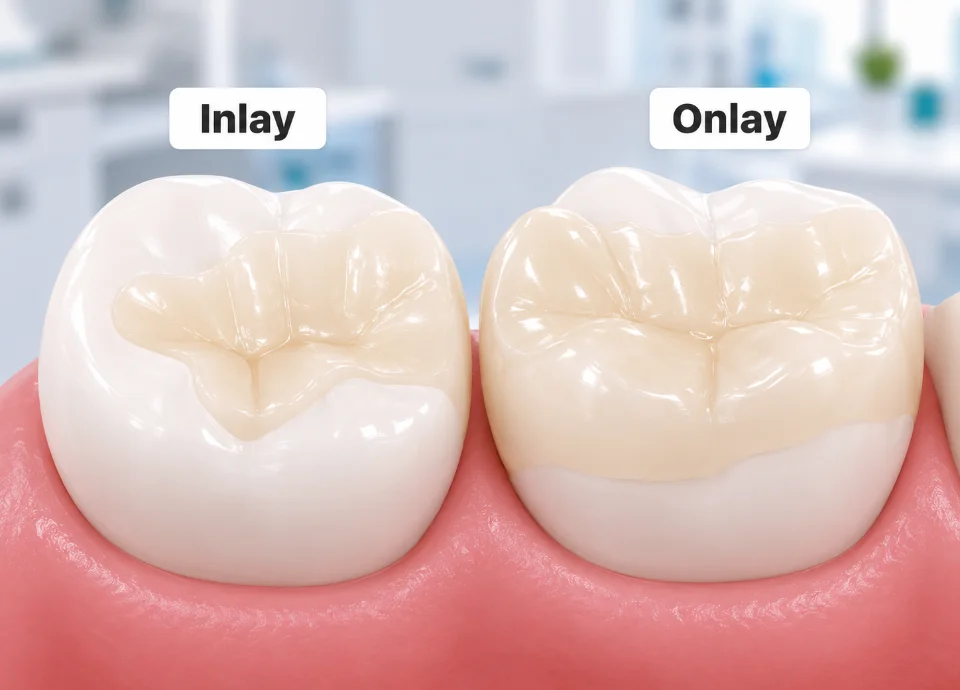
Inlays and Onlays are types of indirect restorations used to repair teeth that are not severe enough to require a crown but still need more support than a standard filling.

Important Information About Access to Our NHS Services.
Quayside Dental Centre has been commissioned by NHS Gloucestershire to improve access to NHS dental care for patients who may face barriers to accessing services.
As a result, appointments are available only to patients who meet specific eligibility criteria.
What is a dental inlay or Onlay?
Inlays and Onlays are types of indirect restorations used to repair teeth that are not severe enough to require a crown but still need more support than a standard filling. They can be made from an alloy metal or ceramic, both of which are tooth-coloured so as to blend with the natural colour of your teeth.
Benefits of inlays and onlays
NHS Dental Charges
Quayside Dental Centre provides NHS dental treatment, with charges set nationally by the NHS.
The cost of treatment depends on the care you need.
Some patients may be entitled to free NHS dental treatment or help with costs. To check eligibility, please click below. If you have any questions about NHS dental charges or eligibility for help with costs, please speak to a member of our team or click below
Band 3
£332.10Band 3 can include:Things patients often ask.
An inlay fits within the grooves of a tooth’s chewing surface, while an onlay is slightly larger and also covers one or more of the cusps (raised points) of the tooth. Your dentist will recommend whichever is most suitable based on the size and location of the damage.
Inlays and onlays are usually fitted over two appointments. At the first, your tooth is prepared and an impression taken; at the second, the custom-made restoration is checked and permanently bonded in place.
They’re not necessarily “better”, but they can be a more suitable option when a cavity is too large for a standard filling but doesn’t yet need a full crown. They’re generally stronger and more durable than a filling, and preserve more of your natural tooth.
Other services.
Book Inlays/Onlays.
If you have any questions about NHS dental charges or eligibility for help with costs, please speak to a member of our team or click here